Leaking, corroded or cold radiators replaced or repaired
We work on the wet side of your heating system — radiators, valves, TRVs and the pipework that feeds them. If a radiator is leaking, corroded through, cold at the top or bottom, or you simply want it swapped for a new one, that's what we handle across Greater Manchester. To be upfront: we don't touch gas or boilers at all, so if the fault turns out to be at the boiler itself, we'll tell you honestly and point you towards a Gas Safe registered engineer.
Signs a radiator needs replacing or repairing
These are the faults that bring people to us most often:
- Water pooling under a radiator, even a small amount
- Rust-coloured staining on the wall behind or the floor beneath
- Cold at the top with the bottom hot — usually trapped air, worth bleeding first
- Cold at the bottom with the top hot — often sludge or corrosion inside
- A radiator that never gets properly warm however long the heating runs
- Visible corrosion, pitting or a bulge in the radiator panel itself
- A valve that won't turn, is seized, or drips when adjusted
- An old radiator that's simply the wrong size or style for the room
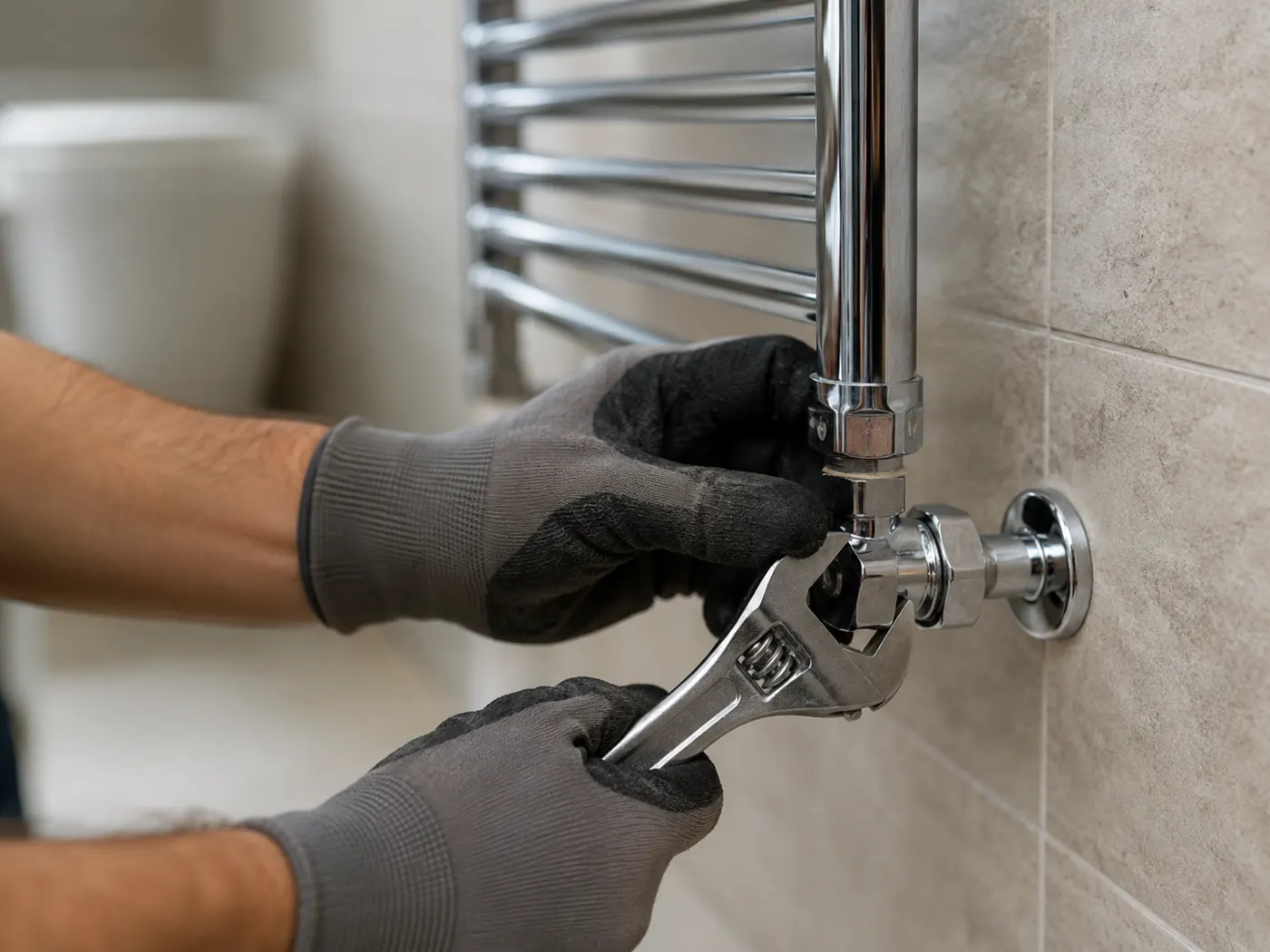
Clear quote before any work starts. A call-out fee may apply — always confirmed on the phone before we travel.
How we handle a radiator job
Whether it's a leak, a cold spot, or a straight swap for a new radiator, the process starts the same way — working out exactly what's wrong before anything's drained or removed.
- 01
Diagnose the actual fault
Cold spots, leaks and corrosion all have different causes and different fixes. We check the valves, the TRV, the bleed point and the radiator body itself before deciding whether it needs a repair or a full replacement. - 02
Isolate and drain safely
The radiator is isolated at both valves and drained down without disturbing the rest of the heating system, so the rest of the house stays warm while we work. - 03
Repair or remove the radiator
A leaking valve connection or a failed bleed valve can often be repaired in place. A radiator that's corroded through the panel itself needs replacing — patching a leaking panel doesn't hold for long. - 04
Fit and connect the replacement
We fit the new radiator to the existing pipework and brackets wherever the size and type allow, matching valve positions so it's a straightforward swap rather than a bigger job. - 05
Refill, bleed and pressure check
The system is refilled, the radiator bled properly, and we check the whole run heats evenly with no leaks at the joints before we leave. If system pressure or the boiler itself needs attention, we'll flag that clearly rather than work on it.
Why radiators fail — and where we draw the line
Most radiator corrosion comes down to sludge and debris building up inside the system over years, especially in older properties around Oldham and Manchester that haven't had the heating system flushed or treated with inhibitor. That sludge settles at the bottom of radiators, which is exactly why cold-at-the-bottom, hot-at-the-top is such a common complaint — and why replacing one radiator without addressing the wider system sometimes just delays the same problem appearing in the next one.
We're straightforward about scope: we work on radiators, TRVs, heating valves and the wet pipework that connects them. We do not touch the boiler and we're not Gas Safe registered, so any fault that traces back to the boiler itself — ignition, the flue, gas pressure, anything of that kind — needs a Gas Safe engineer, and we'll say so plainly rather than have a go.
If you're replacing radiators as part of a wider upgrade — bigger radiators for a cold room, or swapping old single-panel units for double convectors — it's worth having the system checked for sludge at the same time. A power flush alongside new radiators tends to give a better, longer-lasting result than fitting new radiators onto an already dirty system.
Is this an emergency, or can it be booked in?
Both are fine — but it helps us prioritise if you know which one you're describing.
- A radiator is actively leaking onto the floor or through a ceiling
- Water is pooling near electrics or a socket
- A valve has failed and won't shut off
- A radiator has come away from a bracket and is hanging on the pipework
- A radiator that's cold in patches but not leaking
- Cosmetic corrosion you'd like assessed
- You want radiators upgraded or resized during a renovation
- A slow, minor weep at a valve that's being managed for now
Emergency? Here's what to send us
A photo or short video helps too. The more we know before setting off, the less time is wasted when we get there.
Your postcode
So we can tell you straight away whether you're inside the radius we cover.
What the problem is
In your own words — where the water is coming from and how long it's been going on.
A phone number
The best number to reach you on when we're close, so nobody is left waiting at the wrong door.
House or flat
Flats, shared risers and upstairs neighbours change how a leak has to be isolated.
Radiator Replacement — common questions
Do you work on the boiler if that's what's actually causing the fault?
No — we don't do gas or boiler work at all, and we're not Gas Safe registered. If diagnosis points to the boiler rather than the radiators or pipework, we'll tell you clearly and you'll need a Gas Safe registered engineer for that part.
Can you just replace one radiator, or does the whole system need doing?
In most cases a single radiator can be swapped on its own. We'll only recommend looking at the wider system if the sludge or corrosion clearly points to a system-wide issue, and that's a separate conversation and quote.
Why is my radiator cold at the bottom but hot at the top?
That pattern usually means sludge has settled inside the radiator. Bleeding won't fix it since it's not air — it typically needs a flush of that radiator, or in worse cases the whole system.
Can you fit a bigger or different style of radiator than what's there now?
Yes, we can fit larger radiators, different heights, or convector-style units, matching valve positions to the existing pipework wherever practical to keep the job straightforward.
How is a radiator job priced?
You'll get a clear quote once we've seen the radiator and the fault — repair and replacement cost differently and we'll explain the options before starting. A call-out fee may apply, confirmed on the phone before we travel.
More answers on our plumbing FAQ page and in how it works.
Related jobs we take on
Areas we cover for this
Plumbing emergency right now?
Call and speak to the plumber who will be doing the job — not a call centre. Lines are open 24 hours a day, every day.
You get a clear quote before work starts. A call-out fee may apply — confirmed on the phone before we travel.