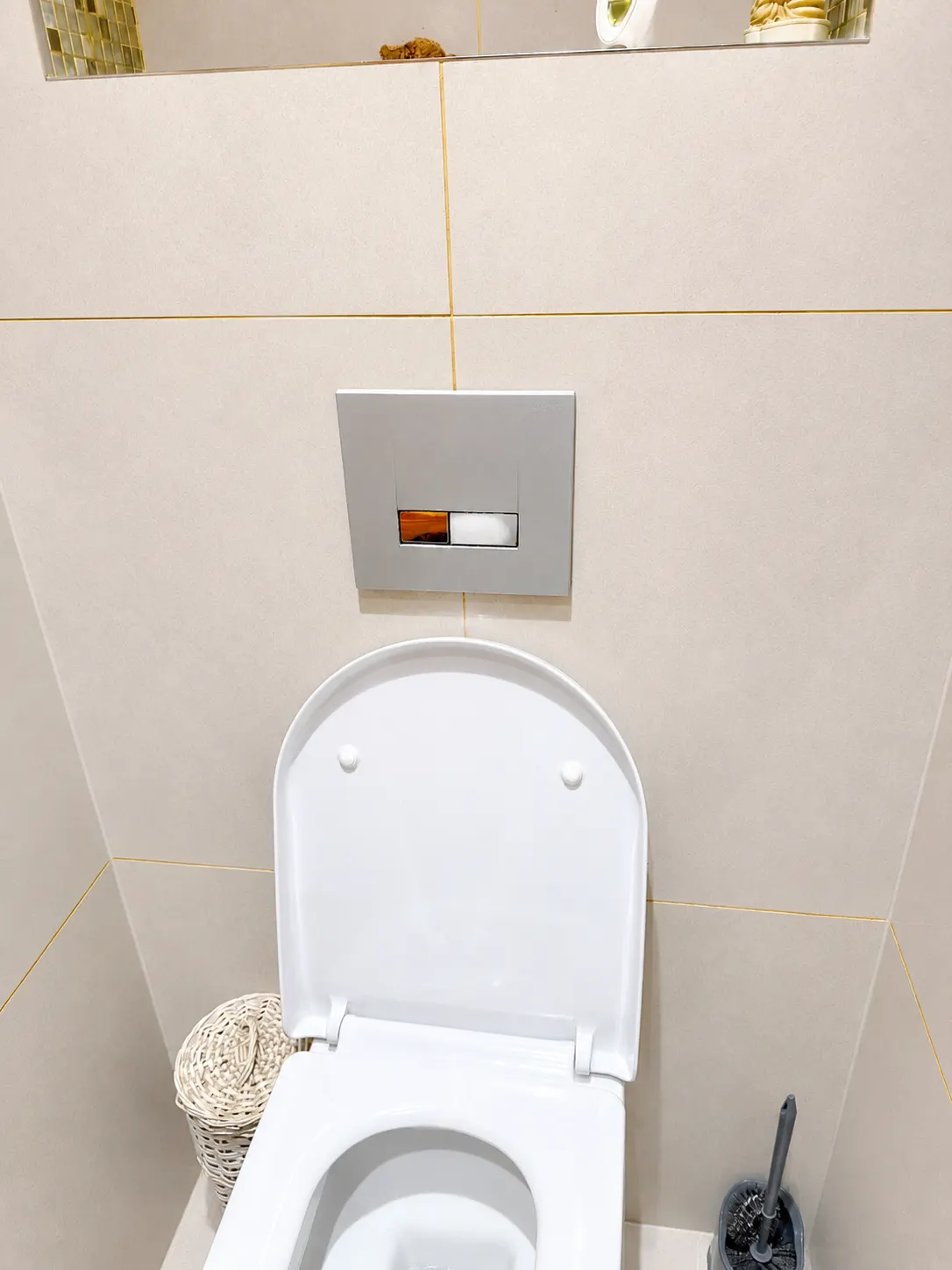
Toilet running, leaking or not flushing right? We fix it
Not every toilet problem is a blockage — a lot of the calls we get are about a cistern that never stops filling, a flush that barely clears the pan, or water appearing where it shouldn't. We repair toilets across Greater Manchester, fixing the actual cause rather than just topping up the water level and leaving.
Common toilet faults we're called out for
These are the issues people describe most often when they call:
- The cistern keeps refilling on its own, sometimes for hours at a time
- Water trickling constantly into the pan even when nobody's used it
- A weak flush that doesn't clear the pan properly
- The flush button or handle feels loose or does nothing at all
- Water pooling around the base of the toilet after flushing
- A cracked or chipped cistern or pan
- The toilet rocks slightly when you sit down or lean on it
- A wobbly or loose seat that won't tighten up
Clear quote before any work starts. A call-out fee may apply — always confirmed on the phone before we travel.
How we approach a toilet repair
Toilets have a handful of moving parts, and a fault usually points to one of them clearly once we're inside the cistern.
- 01
Check the fill valve and float
A running cistern is almost always the fill valve (ballcock) not shutting off properly, or the float arm set too high. We adjust or replace it — a five-minute part that's often mistaken for a bigger problem. - 02
Inspect the flush valve and siphon or flapper
Older toilets use a siphon mechanism, newer ones a flapper valve. A worn diaphragm or a flapper that doesn't seat properly causes both a weak flush and constant water loss into the pan. - 03
Check the pan connector and base for leaks
Water at the base after flushing usually means the pan connector to the soil pipe has failed, or the pan itself is cracked. We check this before assuming it's a seal issue at the cistern. - 04
Tighten and re-secure the fixings
A rocking toilet is a loose fixing bolt at the base or a failed seal underneath — left alone, this eventually cracks the pan or the soil pipe joint, so it's worth sorting early. - 05
Replace parts or the unit if needed
Where the cistern or pan itself is cracked, or parts for an old model are no longer available, we'll quote for a replacement rather than keep patching a toilet that's reached the end of its life.
Why a running toilet costs more than people think
A cistern that runs constantly can waste a genuinely large amount of water over a month — enough that some households notice it on a water bill before they notice the sound. It's one of the most common 'it's not urgent' calls we get, and one of the cheapest to actually fix, so it's rarely worth ignoring for long.
On older toilets, especially the low-level and high-level cistern types still common in period terraces around Oldham and Rochdale, replacement parts are sometimes harder to source than for a modern close-coupled toilet. We carry the common fittings but will always tell you upfront if a part needs sourcing rather than promise a same-visit fix we can't deliver.
Where a toilet is rocking or leaking at the base, don't just tighten the fixing bolts and hope — over-tightening a bolt on a cracked pan can make the crack worse and turn a repair into a full replacement. If in doubt, get it looked at before it's forced any further.
Is this an emergency, or can it be booked in?
Both are fine — but it helps us prioritise if you know which one you're describing.
- Water is visibly leaking onto the floor or through a ceiling below
- It's the only toilet in the property and it's completely unusable
- The toilet is rocking badly and feels unsafe to sit on
- A cracked pan or cistern is actively leaking
- A running cistern that's annoying but not causing damage
- A weak flush on a toilet that still works
- A loose seat or handle
- You want an old toilet assessed before deciding on repair or replacement
Emergency? Here's what to send us
A photo or short video helps too. The more we know before setting off, the less time is wasted when we get there.
Your postcode
So we can tell you straight away whether you're inside the radius we cover.
What the problem is
In your own words — where the water is coming from and how long it's been going on.
A phone number
The best number to reach you on when we're close, so nobody is left waiting at the wrong door.
House or flat
Flats, shared risers and upstairs neighbours change how a leak has to be isolated.
Toilet Repairs — common questions
My cistern only runs occasionally, not all the time — is that still worth fixing?
Yes. Intermittent running is usually the same fill valve or flapper fault, just further along — it will likely become constant. Easier and cheaper to sort now than after it's been running non-stop for weeks.
Can you repair old high-level cistern toilets?
In most cases yes, though parts for some older models take longer to source than for modern close-coupled toilets. We'll tell you honestly if a replacement makes more sense than chasing obsolete parts.
Is a rocking toilet dangerous?
It won't collapse under normal use, but it puts uneven pressure on the pan and the waste connection, which can crack either over time. Worth fixing before it becomes a leak.
Do you replace whole toilets, not just repair them?
Yes — where the pan or cistern is cracked, or an old model isn't worth repairing, we supply and fit a replacement with a clear quote agreed before any work starts.
How is toilet repair pricing worked out?
You get a clear quote before we start any work, based on what's actually wrong once we've had a look. A call-out fee may apply and that's confirmed on the phone before we travel.
More answers on our plumbing FAQ page and in how it works.
Related jobs we take on
Areas we cover for this
Plumbing emergency right now?
Call and speak to the plumber who will be doing the job — not a call centre. Lines are open 24 hours a day, every day.
You get a clear quote before work starts. A call-out fee may apply — confirmed on the phone before we travel.