
Water leak detection and repair — Oldham & Manchester
Not every leak announces itself with a flood. A lot of the calls I get are about a damp patch that keeps coming back, a water bill that has crept up for no obvious reason, or a wall that's cold and slightly wet to the touch. Tracing a hidden leak properly, rather than guessing and opening up the wrong bit of plaster, is most of the job.
Signs of a hidden or slow leak
Slow leaks tend to show up in indirect ways before anyone spots actual water:
- A water bill that's noticeably higher with no change in how the property is used
- A damp or discoloured patch on a wall or ceiling that grows slowly over weeks
- A musty smell in a specific room that won't go away
- Warm patches on a solid floor, which usually points to a leak on the central heating pipework beneath it
- The water meter still ticking over with every tap and appliance off
- Skirting board, laminate or carpet lifting near an external wall or under a bathroom
- Mould appearing on a wall that has never had a damp problem before
- A drop in water pressure at one tap that used to run fine
Clear quote before any work starts. A call-out fee may apply — always confirmed on the phone before we travel.
How I find and fix a leak
Finding it accurately matters more than moving fast — cutting into the wrong wall just adds a second repair to the first.
- 01
Rule out the obvious first
Visible pipework under sinks, behind the toilet, at the boiler and around any outside tap gets checked first — a surprising number of 'mystery' leaks turn out to be a loose compression joint somewhere in plain sight. - 02
Check the meter
With everything in the house turned off, I check whether the water meter is still moving. If it is, there's a leak somewhere on the supply, which narrows things down considerably before any opening-up starts. - 03
Trace the run methodically
I follow the pipe run through the property, checking for damp, temperature differences and sound, rather than opening up plaster on a guess. Where a leak is under a solid floor on a heating pipe, this takes a bit more care and time. - 04
Open up only where needed
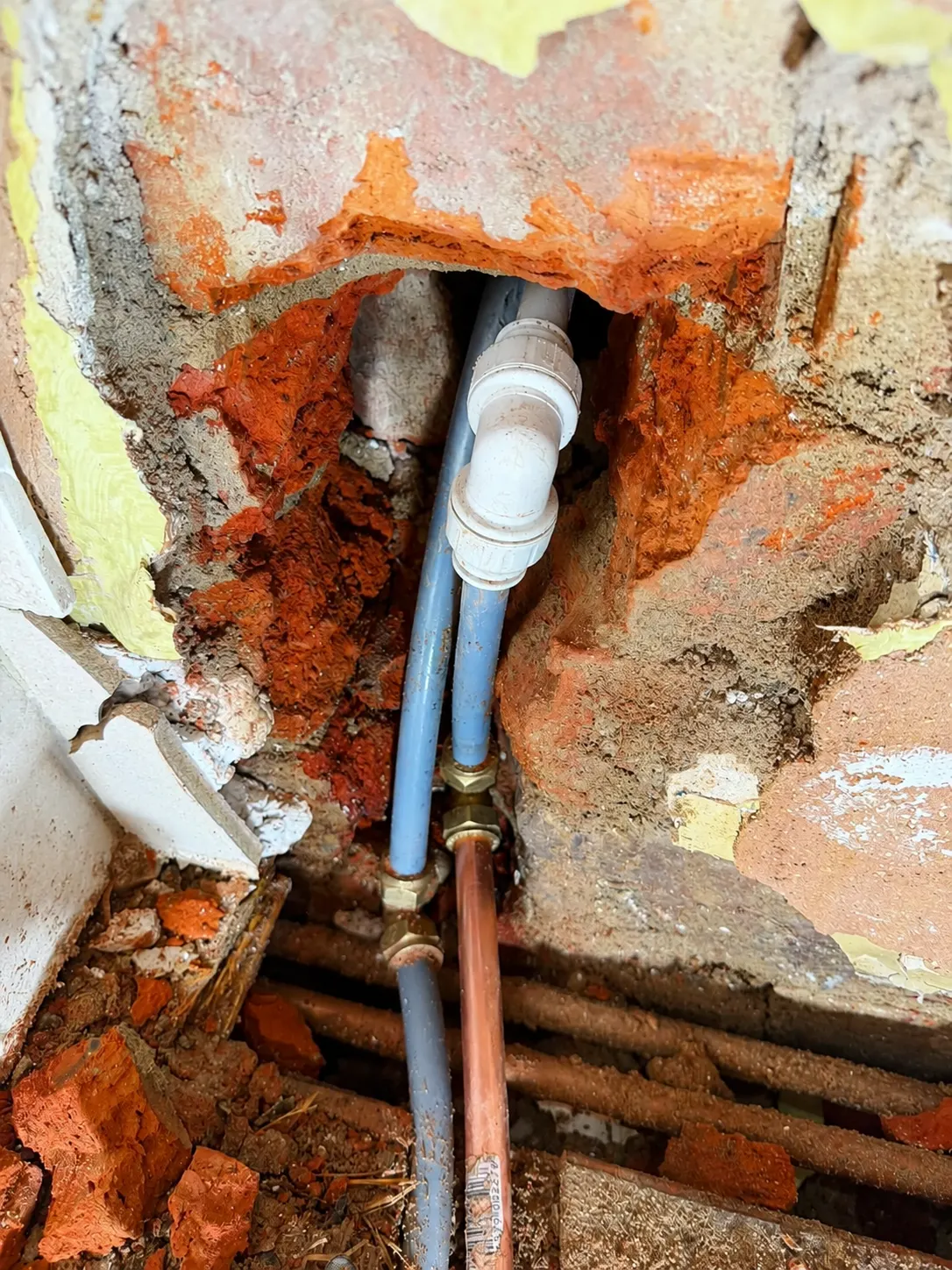
Once I'm confident where the leak is, I'll open the smallest section of wall, floor or ceiling necessary to reach it — and talk you through it before I start cutting anything. - 05
Repair, test, and leave it right
The damaged section gets repaired or replaced, then pressure tested before I close anything back up, so we're both confident it's actually fixed and not just quieter for a fortnight.
Why leaks are often harder to find than expected
Water doesn't always drip straight down from where it's escaping — it can travel along a joist, follow a pipe run, or soak sideways through plaster before it ever shows as a stain. A patch on a ceiling downstairs might genuinely be caused by a leak a metre or two away upstairs, which is why guessing costs more than it saves.
In properties across Oldham and Manchester with solid concrete ground floors, a leak on the central heating pipework buried in the screed is one of the trickier ones — it shows as a warm patch and a slowly falling boiler pressure rather than visible water, and needs a more careful approach than lifting a floorboard.
Where the leak turns out to be on the supply pipe outside the property boundary, that's generally United Utilities' responsibility rather than yours, and I'll tell you plainly if that's what I find rather than opening up more than needed on your side.
Is this an emergency, or can it be booked in?
Both are fine — but it helps us prioritise if you know which one you're describing.
- Water is visibly coming through a ceiling or wall right now
- A damp patch has appeared suddenly and is clearly growing
- You can hear running water behind a wall with everything turned off
- The leak is near electrics or a light fitting
- A water bill has crept up gradually with no obvious cause
- A stain on a wall or ceiling has been stable for a while
- You want a suspected slow leak investigated before it worsens
- A slightly warm patch on the floor has been there for some time with no other symptoms
Emergency? Here's what to send us
A photo or short video helps too. The more we know before setting off, the less time is wasted when we get there.
Your postcode
So we can tell you straight away whether you're inside the radius we cover.
What the problem is
In your own words — where the water is coming from and how long it's been going on.
A phone number
The best number to reach you on when we're close, so nobody is left waiting at the wrong door.
House or flat
Flats, shared risers and upstairs neighbours change how a leak has to be isolated.
Water Leaks — common questions
Can you find a leak without ripping the wall apart?
In most cases, yes — checking the meter, tracing the run and narrowing it down properly means I usually only need to open a small, targeted section rather than a whole wall.
My water bill went up but I can't see any damp anywhere — could it still be a leak?
Yes. A leak on a pipe running through the ground, or one that's draining into an existing drain run, can raise your bill for months before it ever shows as visible damp inside the property.
Is a leak under my floor my responsibility?
Anything within your property boundary is generally yours to sort out. If tracing the leak shows it's actually on the supply pipe beyond your boundary, that's usually United Utilities' side, and I'll point you at them rather than charging you to fix their pipe.
Will you repair the plaster or flooring you open up?
I make good the pipework and I'll leave any opening tidy, but full plastering, tiling or flooring reinstatement is usually better handled by a decorator or builder, and I'm happy to hand over once the leak itself is fixed.
How is a leak investigation charged?
You'll get a clear quote before any work starts, and a call-out fee may apply — that's always confirmed on the phone before I travel.
More answers on our plumbing FAQ page and in how it works.
Related jobs we take on
Areas we cover for this
Plumbing emergency right now?
Call and speak to the plumber who will be doing the job — not a call centre. Lines are open 24 hours a day, every day.
You get a clear quote before work starts. A call-out fee may apply — confirmed on the phone before we travel.