
High-pressure drain jetting — Oldham & Manchester
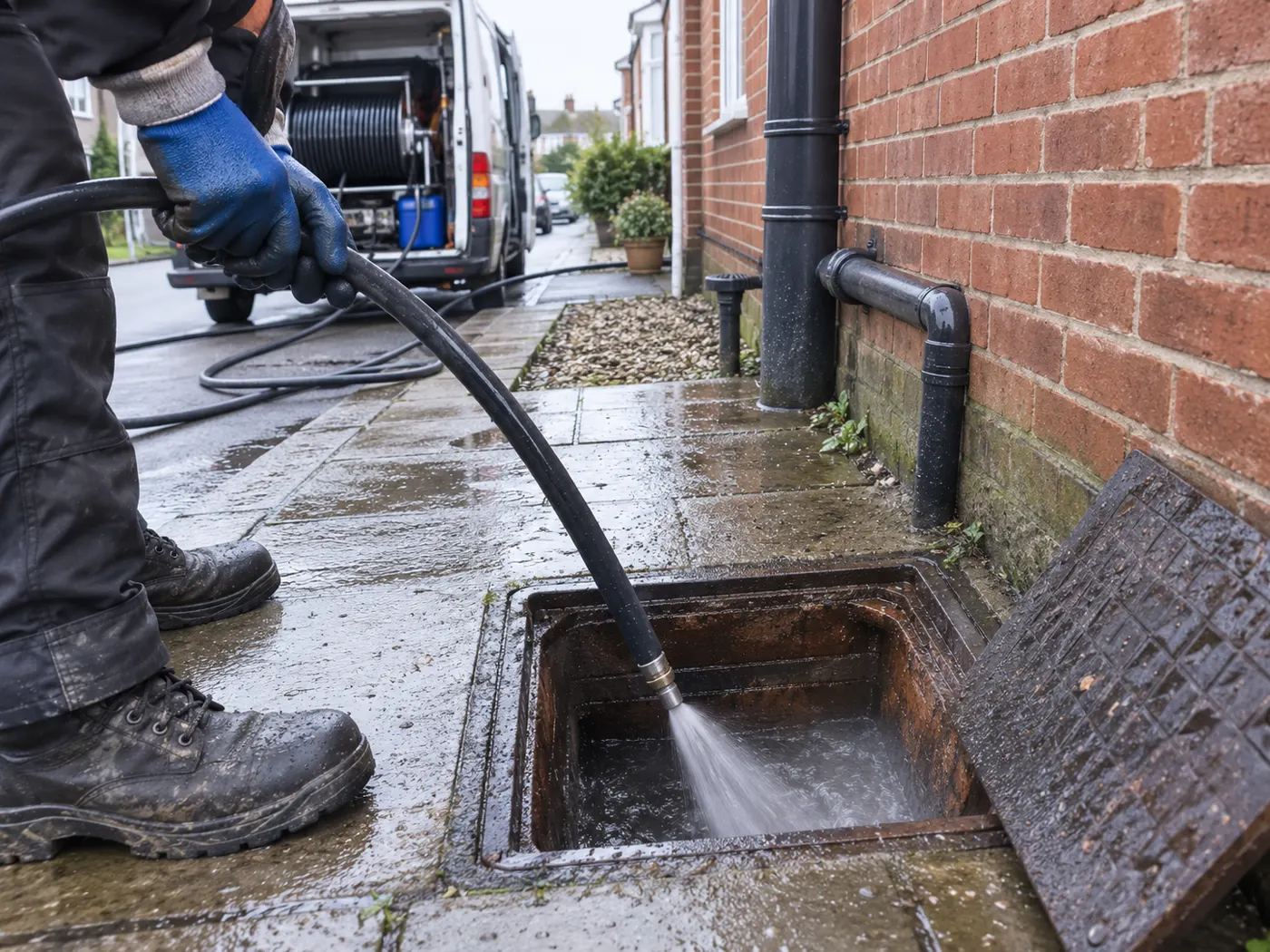
Rods and augers move a blockage out of the way; jetting actually cleans the pipe. When a drain has blocked more than once, or rodding has only ever bought a few weeks before it comes back, high-pressure jetting is usually what actually sorts it — I strip the built-up grease, silt or roots off the pipe walls rather than just punching a hole through the middle.
When jetting is the right call, not just rodding
A few signs tend to point to jetting rather than a standard rod-and-clear:
- The same drain has blocked two or three times in the last year despite being cleared each time
- Rodding clears it but the flow is still sluggish afterwards
- A kitchen waste run has heavy grease build-up rather than a single solid blockage
- Roots are visible or suspected in an older clay drain run
- A survey or camera inspection has shown a build-up coating the inside of the pipe
- Multiple gullies or fixtures across the property are all draining slowly
- You're about to sell or let the property and want the drains genuinely clear, not just unblocked for now
Clear quote before any work starts. A call-out fee may apply — always confirmed on the phone before we travel.
How the jetting process works
It's a controlled process, not just blasting water down a pipe and hoping.
- 01
Locate access points
I find the nearest manhole, inspection chamber or rodding eye to the section that needs clearing, so the jetting hose can be fed in with the flow rather than fighting against it. - 02
Check the run first where possible
Where it's useful, I'll have a look at the general condition of the run before jetting, so I know roughly what I'm dealing with — grease, silt, roots, or a mix — and can set the jet head and pressure accordingly. - 03
Jet the pipe in stages
The hose feeds along the pipe with a rotating nozzle that cuts and flushes debris off the pipe walls back toward the access point, rather than just pushing everything further down the line. - 04
Clear the debris out
Everything that's been stripped off the pipe walls gets washed back and removed from the chamber, rather than left to resettle further along and cause the next blockage. - 05
Confirm the flow afterwards
I run water through and check the chamber to confirm it's flowing freely along the full length jetted, not just at the near end.
Why jetting outlasts a standard rodding call
Rodding is quick and effective at breaking through a specific blockage, but it tends to leave a build-up coating the rest of the pipe untouched. That coating is exactly what catches the next lump of grease or waste and blocks again within weeks — which is why some drains seem to need clearing every few months no matter how carefully they're rodded.
Jetting works differently because the water pressure scours the full circumference of the pipe wall, not just a channel through the middle. On a kitchen waste run with years of fat build-up, or an external drain with root ingress at a joint, that difference is usually what stops the blockage becoming a repeat job.
It's not always the right first step, though — a simple one-off blockage from a dropped object or a single wipe usually just needs rodding, and I'll say so rather than recommending jetting when it isn't needed. Where a camera survey shows a genuinely damaged or collapsed section, jetting alone won't fix that and I'll be upfront that the pipe itself needs repair.
Is this an emergency, or can it be booked in?
Both are fine — but it helps us prioritise if you know which one you're describing.
- Multiple drains or gullies across the property are backing up at once
- A drain is overflowing outside and creating standing water near the property
- A blockage has come straight back within days of being rodded
- Foul water is surfacing at an external gully or manhole
- A drain has blocked repeatedly over recent months but is currently running
- You've had a survey recommend jetting rather than an urgent blockage
- You want a kitchen waste run cleaned through as preventative maintenance
- It's part of preparing a rental property between tenancies
Emergency? Here's what to send us
A photo or short video helps too. The more we know before setting off, the less time is wasted when we get there.
Your postcode
So we can tell you straight away whether you're inside the radius we cover.
What the problem is
In your own words — where the water is coming from and how long it's been going on.
A phone number
The best number to reach you on when we're close, so nobody is left waiting at the wrong door.
House or flat
Flats, shared risers and upstairs neighbours change how a leak has to be isolated.
Drain Jetting — common questions
Is jetting safe for older pipework?
It can be, but pressure and nozzle choice need adjusting for older or more fragile clay and cast iron runs. Where a pipe looks genuinely weak or already damaged, I'll say so rather than jetting it at full pressure regardless.
How is jetting different from rodding?
Rodding pushes a rigid or semi-rigid rod through to break up and dislodge a blockage. Jetting uses a high-pressure water jet fed along the pipe to scour built-up residue off the entire pipe wall, which is generally more thorough for recurring or grease-related blockages.
Will jetting fix a collapsed or cracked drain?
No — jetting clears blockages and build-up, it doesn't repair damaged pipework. If a run turns out to be cracked or collapsed, that needs excavation or lining, and I'll tell you plainly if that's what I find.
Can you jet a drain shared with next door?
Shared or lateral drains beyond your boundary are usually a joint responsibility, and sometimes United Utilities' depending on where the blockage sits. I'll tell you where the boundary is if it comes up during the job.
How is jetting priced?
You'll get a clear quote before I start, based on what needs jetting and how accessible it is. A call-out fee may apply, confirmed on the phone before I travel.
More answers on our plumbing FAQ page and in how it works.
Related jobs we take on
Areas we cover for this
Plumbing emergency right now?
Call and speak to the plumber who will be doing the job — not a call centre. Lines are open 24 hours a day, every day.
You get a clear quote before work starts. A call-out fee may apply — confirmed on the phone before we travel.